Concrete is the backbone of modern civilization. From roads and runways to data centers, distribution hubs, bridges, and high-rise structures, concrete is the most widely used construction material on the planet — with nearly 30 billion tons produced every year. Its scale is unmatched, but so is the environmental cost that comes with it.
As global climate goals accelerate and building performance expectations rise, the industry is being challenged in ways not seen before. The question facing engineers, ready-mix producers, and contractors is no longer simply How do we build?
It’s:
How do we build stronger, faster, and more sustainably — without compromising performance?
The Carbon Challenge No One Can Ignore
.png?width=500&height=279&name=Untitled%20design%20(42).png)
Cement, the key ingredient in concrete, is responsible for nearly 8% of global CO₂ emissions. Every ton of cement produced releases roughly one ton of CO₂ — a reflection of both the extreme heat required to produce clinker and the chemical reaction (calcination) that releases carbon during production.
With the construction sector under mounting pressure to lower embodied carbon, the industry is pursuing multiple pathways:
-
CO₂ capture and mineralization technologies
-
Alternative fuels
-
Supplementary cementitious materials (SCMs)
-
Blended cements like Type IL
-
Optimized mix designs
-
High-performance admixtures
.png?width=250&height=181&name=Untitled%20design%20(41).png)
But advancing sustainability only solves half the problem. As cement content decreases and blends shift, performance becomes less predictable, especially in terms of finishing, curing, and long-term durability.
This is where true innovation is needed — not just greener materials, but smarter chemistry.
Performance Pressures on the Jobsite
Modern construction operates under intense constraints:
-
Condensed schedules: Faster turnarounds, earlier loading, tighter sequencing.
-
Labor shortages: Fewer experienced finishers means more variability.
-
Material variability: Aggregates, sands, and cements differ region to region.
-
Evolving cement blends: Type IL behaves differently than Type I.
-
Climate extremes: Higher temperatures, humidity swings, and rapid drying.
.png?width=2240&height=1260&name=Blog%20Banner%20(2).png)
These conditions place enormous pressure on the finishing crew, ready-mix providers, and the concrete itself. Contractors are reporting:
-
Unpredictable finishing windows
-
Rapid surface crusting
-
Increased plastic shrinkage
-
Longer drying times
-
Higher risks of cracking and curling
Concrete is being asked to perform better under more challenging conditions — with fewer resources.
Nanotechnology: Where Modern Concrete Turns the Corner
Nanotechnology represents a breakthrough the industry has been chasing for decades.
By engineering materials at the molecular level, we can influence hydration, durability, and long-term performance in ways that traditional admixtures cannot.
E5® Nano Silica is the result of this approach.
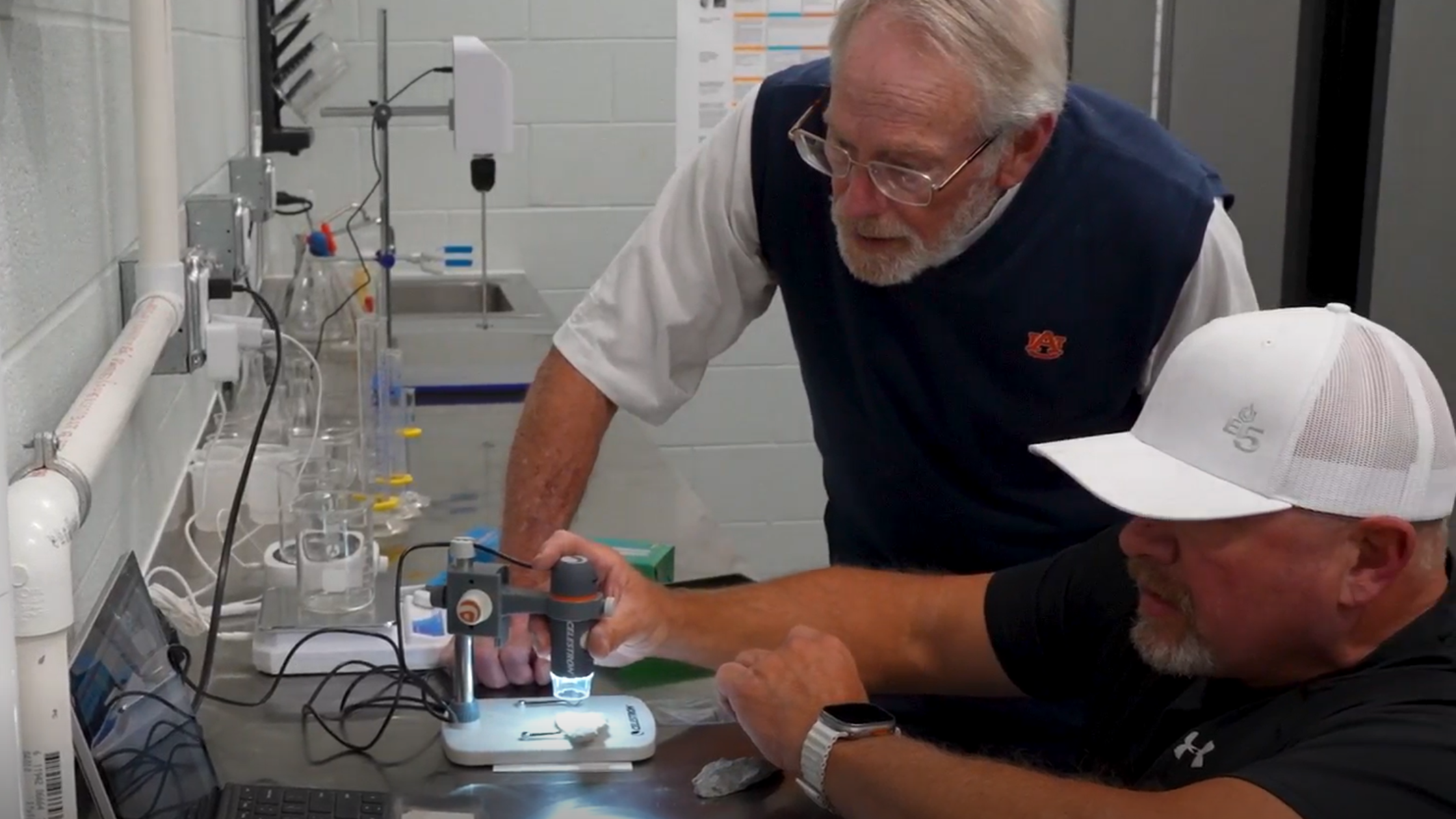
Its engineered colloidal silica particles interact with cement hydration at the exact moment the chemical reaction requires support. Instead of adding water to the surface (traditional curing), E5® delivers moisture from within, supporting a more complete hydration process throughout the paste.
What does that mean in practice?
-
A denser cement matrix
-
Reduced permeability
-
Fewer pathways for moisture and chlorides
-
Stronger flexural and compressive performance
-
Superior finishability
-
Faster, more reliable curing behavior
This is hydration control — not at the surface, but in the molecular structure of the concrete itself.
Internal Curing: Why It Matters More Than Ever
Traditional curing relies on applying water to the surface. But as mix designs evolve, the effectiveness of external curing becomes increasingly limited.
Surface water doesn’t penetrate deeply, environmental exposure evaporates curing water prematurely, and inconsistent application leads to inconsistent results.
Internal curing changes the equation.
E5® retains moisture at the nano scale, releasing it in response to cement’s hydration demands. This creates:
-
Balanced internal moisture
-
More complete hydration
-
Steadier temperature profiles (reduced thermal stresses)
-
Better long-term durability
-
Reduced shrinkage and curling
On the jobsite, this translates to fewer callbacks, more predictable slab behavior, and improved overall performance — without additional steps, coverings, or water.
Quantifiable Improvements Backed by Real Data
Across laboratory studies, national testing programs, and field placements, E5® technologies have demonstrated measurable improvements across critical performance categories:
Durability
-
Reduced permeability
-
Improved surface integrity
-
Better resistance to freeze-thaw cycles
-
Lower potential for scaling
Strength
-
Increased density of C-S-H (the strength-giving component of concrete)
-
Enhanced flexural performance
-
More consistent curing across depth
Moisture Control
-
Smoother moisture profiles across slab thickness
-
Reduced RH values over time
-
Fewer flooring failures from moisture emission
Sustainability.png?width=150&height=150&name=Untitled%20design%20(43).png)
-
Significant potential for cement reduction
-
Lower embodied carbon (improved GWP scores)
-
No external curing → reduced water use
-
Elimination of curing blankets, visqueen, and waste
The data continues to reinforce one point: hydration control at the nano level leads to better-consolidated, longer-lasting concrete.
Ease of Use: The X-Factor for Adoption
.png?width=500&height=264&name=Untitled%20design%20(46).png)
A major barrier to innovation in concrete is complexity. Crews need solutions that make their work easier — not more complicated.
E5® succeeds because it fits into existing workflows:
-
No special equipment
-
No added steps
-
No extended cure times
-
No changes to placement, finishing, or polishing
-
No wet cure requirements
It replaces variables with consistency, giving contractors predictable results without altering their process.
Building the Future: A Smarter, Stronger, More Sustainable Industry
With the construction industry shifting toward performance-based specifications, reduced carbon footprints, and long-lasting infrastructure, nanotechnology represents not just an advancement — but a turning point.
E5® allows designers, producers, and contractors to:
-
Build with less cement while achieving higher performance
-
Reduce the environmental impact of every yard
-
Improve durability and lifecycle value
-
Increase finishing reliability
-
Deliver consistent, repeatable results across regions and mix types
As infrastructure demands grow and sustainability expectations rise, the need for smarter hydration control becomes undeniable.
Concrete isn’t just changing — it’s evolving.
And E5® is at the forefront of that evolution.