E5-1

Waterproofing Solutions

E5® Nano Silica densifies the concrete matrix to dramatically reduce permeability and promote ongoing self-sealing as the slab hydrates over time. Build waterproofing into the structure itself—cutting labor, simplifying schedules, and improving long-term ROI.
waterproofing-1

Internal PRAH Performance

Functions as a permeability-reducing admixture for hydrostatic conditions—targeting water movement at the source instead of relying on external membranes.

Permeability ↓ Up to 90%

Tightens the pore structure to block water under pressure and help protect finishes and reinforcement over the service life of the concrete.

Self-Sealing Over Time

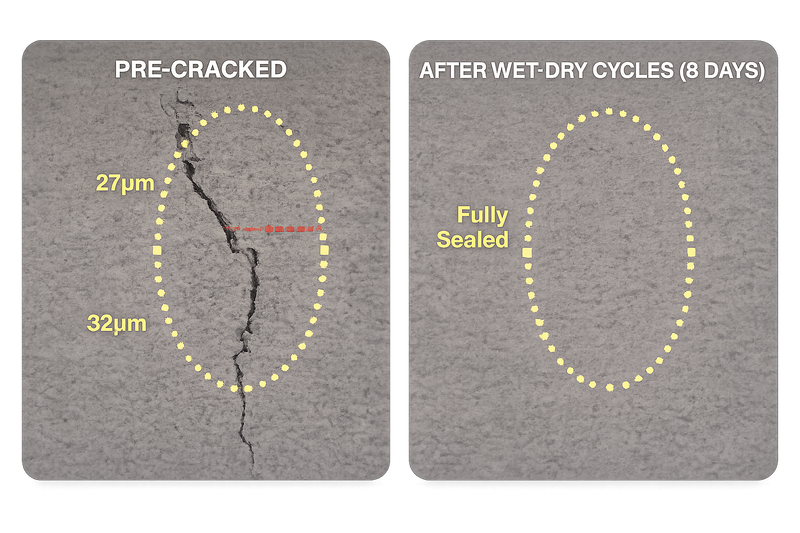
Nano Silica continues to react with unhydrated cement, refining the matrix and helping seal micro-cracks as the slab matures.

The Future of Waterproofing: Built Inside the Concrete

E5® admixtures tighten the pore structure, reduce permeability by up to 90%, and encourage crack self-sealing—eliminating reliance on external membranes or coatings.

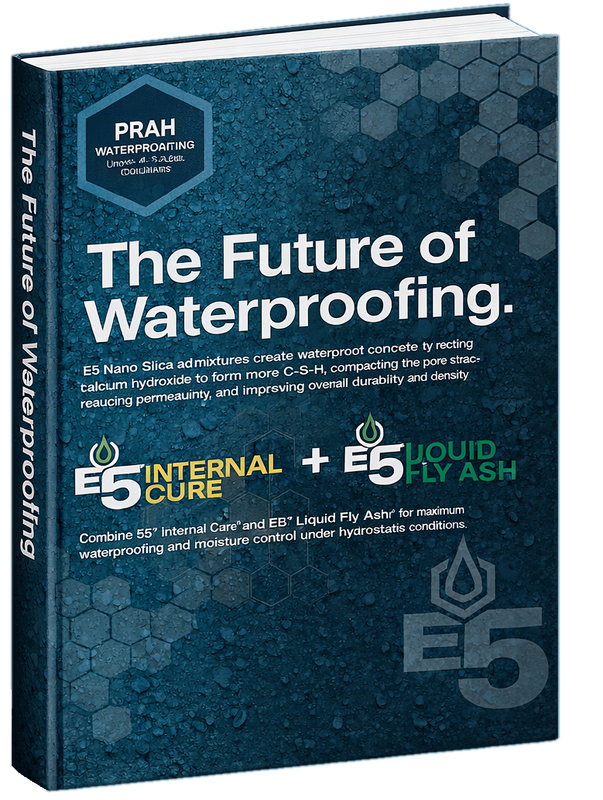
Combine E5 Internal Cure and E5 Liquid Fly Ash for maximum waterproofing and moisture control under hydrostatic conditions.

The E5® Solution — Waterproofing from Within

Unlike damp-proofing (PRAN) or surface treatments, E5® functions as a PRAH—a permeability-reducing admixture for hydrostatic conditions—validated by third-party testing.

Benefits

Permeability Reduction

Lowers permeability by 50%–90% under hydrostatic conditions by tightening the pore structure at the capillary level. This reduces water transport pathways even when structures are under pressure. In practice, it protects finishes, reinforcement, and below-grade spaces from water-driven damage.

Self-Healing

Nano Silica continues to react with unhydrated cement over time, forming additional C-S-H and refining microcracks. This ongoing densification helps close leak paths that emerge from shrinkage or service loading. Owners gain a slab that actively resists new moisture routes through its life.

Stronger Matrix

Precisely sized particles pack tightly to fill voids and reduce connectivity between capillaries. The result is a denser matrix that better resists freeze–thaw scaling and chloride ingress. Densification also supports surface durability and finish quality.


Sustainability

Leveraging E5® Liquid Fly Ash allows meaningful cement reduction while maintaining performance. Lower cement content reduces embodied carbon and eases material volatility tied to SCM supply. Projects meet sustainability targets without adding curing steps or coatings.

ASTM C494 Type S Admixture

Performance is verified as a Type S (Specific Performance) admixture, aligning with industry specification language. That makes it easier for engineers to call out requirements and for producers to document compliance. It also simplifies submittals and QA/QC conversations.

Technical Validation

Standards

Conforms with ACI 212.3R-10, Chapter 15 (PRAH) guidance for admixtures that reduce permeability under hydrostatic conditions. Referencing this chapter helps specifiers distinguish true hydrostatic performance from damp-proofing (PRAN). It anchors the solution to widely recognized concrete practice.

Testing

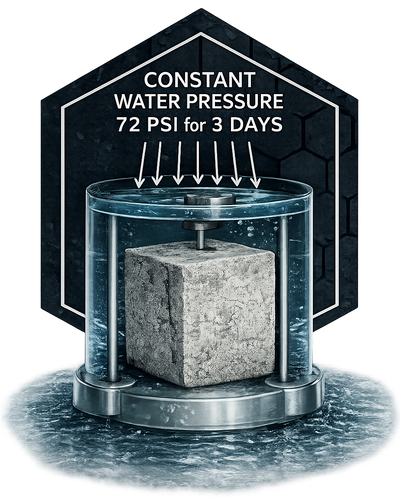
Verified by DIN 1048-5 / BS EN 12390-8 water penetration testing at ~72 PSI over a 3-day pressure duration. These methods quantify penetration depth through concrete under sustained head, a direct proxy for hydrostatic resistance. Passing results demonstrate reduced transport even in demanding below-grade or water-bearing conditions.

Research

Independent work (e.g., Purdue University / Dr. Luna Lu) supports the durability benefits of self-healing and matrix densification. These findings back the long-term crack-sealing and permeability reduction mechanisms claimed. The takeaway: the chemistry continues working beyond initial cure.

Dosage

Follow project-specific dosing (e.g., internal cure and LFA ranges) and verify with trial mixes to account for local materials and ambient conditions. Add admixtures individually and maintain proper mixing revolutions for uniform dispersion. Field QC should confirm slump/flow, air, and early strengths align with targets.

Compatibility

Compatible with typical mix designs and other E5® products when sequenced correctly; avoid combining concentrates before addition. Maintain standard curing/placement best practices to realize hydrostatic benefits. For structures under constant head, ensure cover depths and joint details remain per design.

the-future-of-waterproofing-book-transparent-1-1

Download Submittal Package

E5® Waterproofing Submittal Package to get everything you need to evaluate, specify, and approve E5® waterproofing with confidence.
The Problem with Traditional Waterproofing

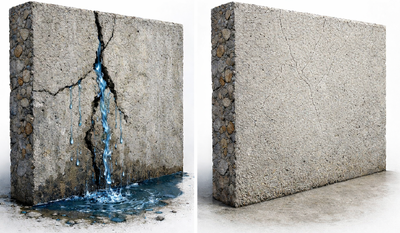
Weeping Concrete
pexels-jayesh-jagtap-523838615-23957435
dam
IMG_5581-1

The Problem with Traditional Waterproofing

Weeping Concrete

Moisture Intrusion & Waterproofing

E5® colloidal silica admixtures help waterproof concrete by transforming the concrete microstructure to resist water intrusion and promote microcrack self-sealing. Nano-scale silica particles act as highly reactive nucleation sites that drive more complete cement hydration, forming additional calcium silicate hydrate (C-S-H) inside capillaries, voids, and microcracks. When thermal movement or shrinkage creates microcracks, the system supports continued C-S-H formation that seals fissures and reduces permeability.

Beyond crack healing, E5® further lowers permeability by refining pore structure and reducing pore connectivity throughout the cement matrix. This densified structure limits capillary suction, slows water transport, and blocks pathways that enable moisture and vapor migration through slabs, walls, and foundations. The result is improved resistance to hydrostatic pressure and groundwater intrusion, extending service life while reducing maintenance tied to moisture-related deterioration.

The Problem with Traditional Waterproofing

pexels-jayesh-jagtap-523838615-23957435

High Labor & Complexity

Membranes, coatings, wet curing, and surface densifiers add passes, trades, and sequencing risk. Each additional step introduces variability in coverage, overlap, cure time, and weather exposure.


Missed windows trigger rework, schedule slips, and change orders. Crews spend more time managing logistics than delivering value, and budgets absorb the overrun.

The Problem with Traditional Waterproofing

dam

Durability Gaps

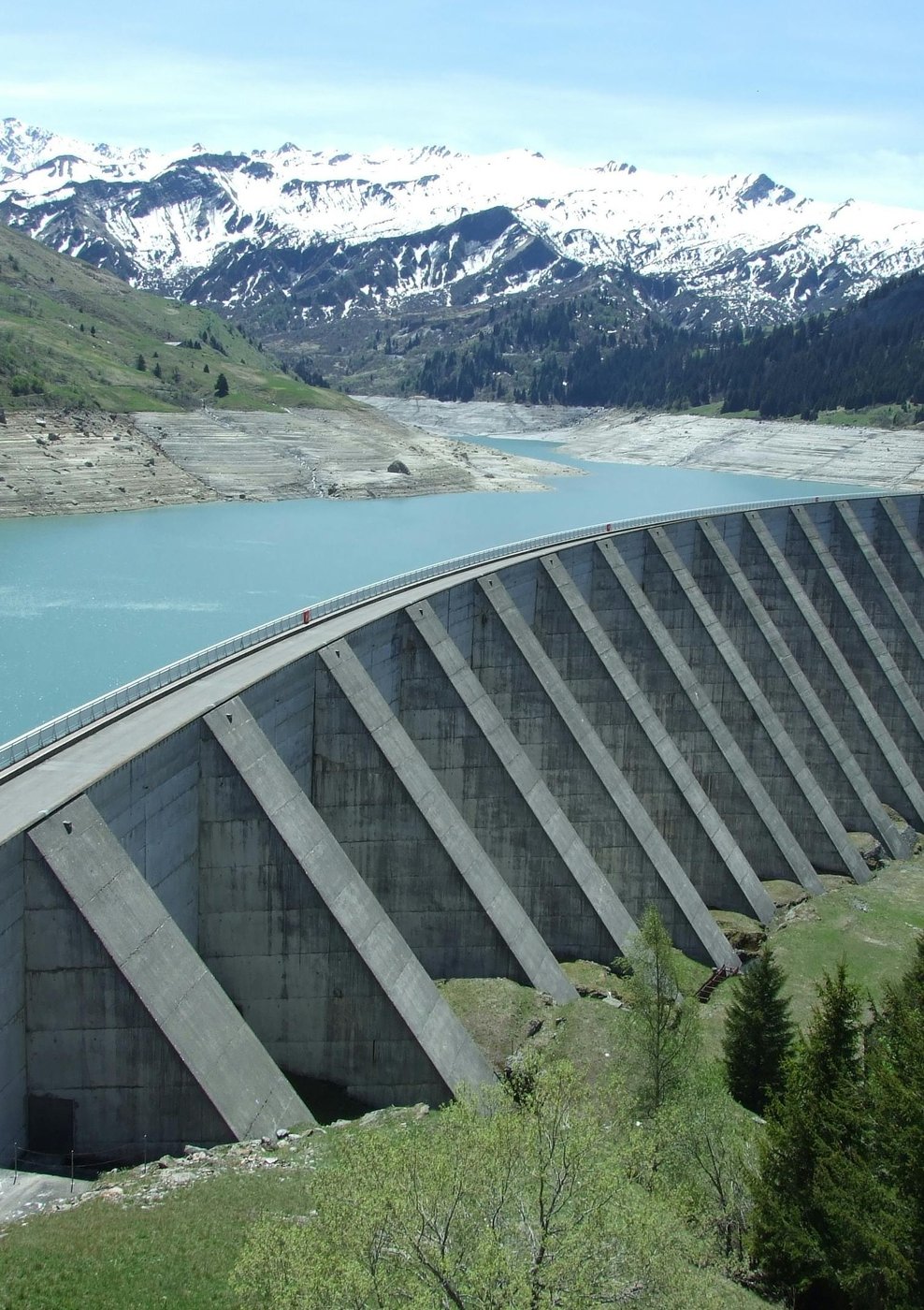
Traditional approaches often leave pathways—shrinkage cracks, microcracks, and connected capillaries—where water under hydrostatic pressure can still move. Even minor discontinuities or penetrations become leak points once the structure is in service.


This accelerates corrosion, freeze–thaw scaling, and surface spalling, shortening service life. Owners face higher O&M, earlier rehab, and more frequent outages.

The Problem with Traditional Waterproofing

IMG_5581-1

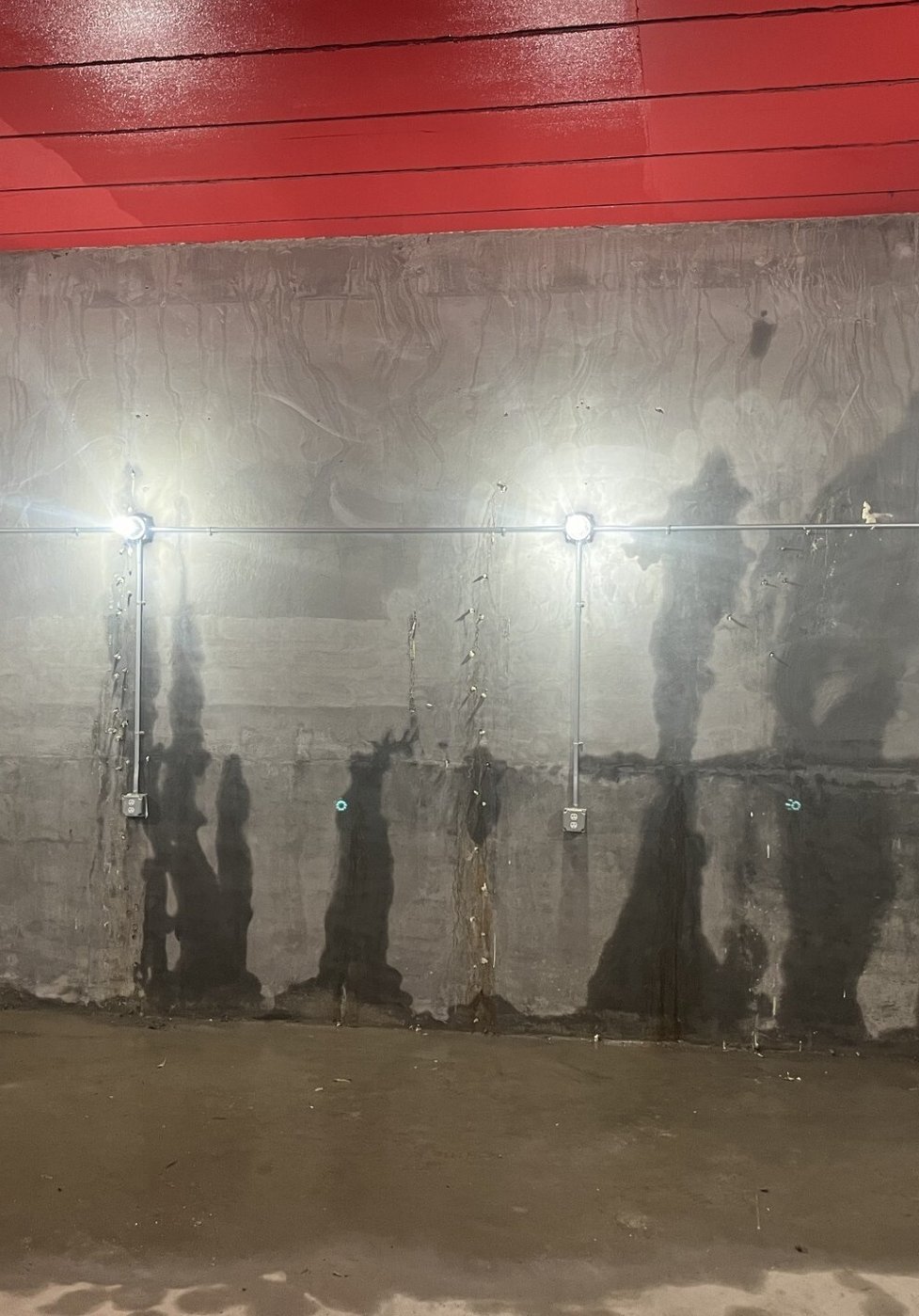
Reputation at Risk

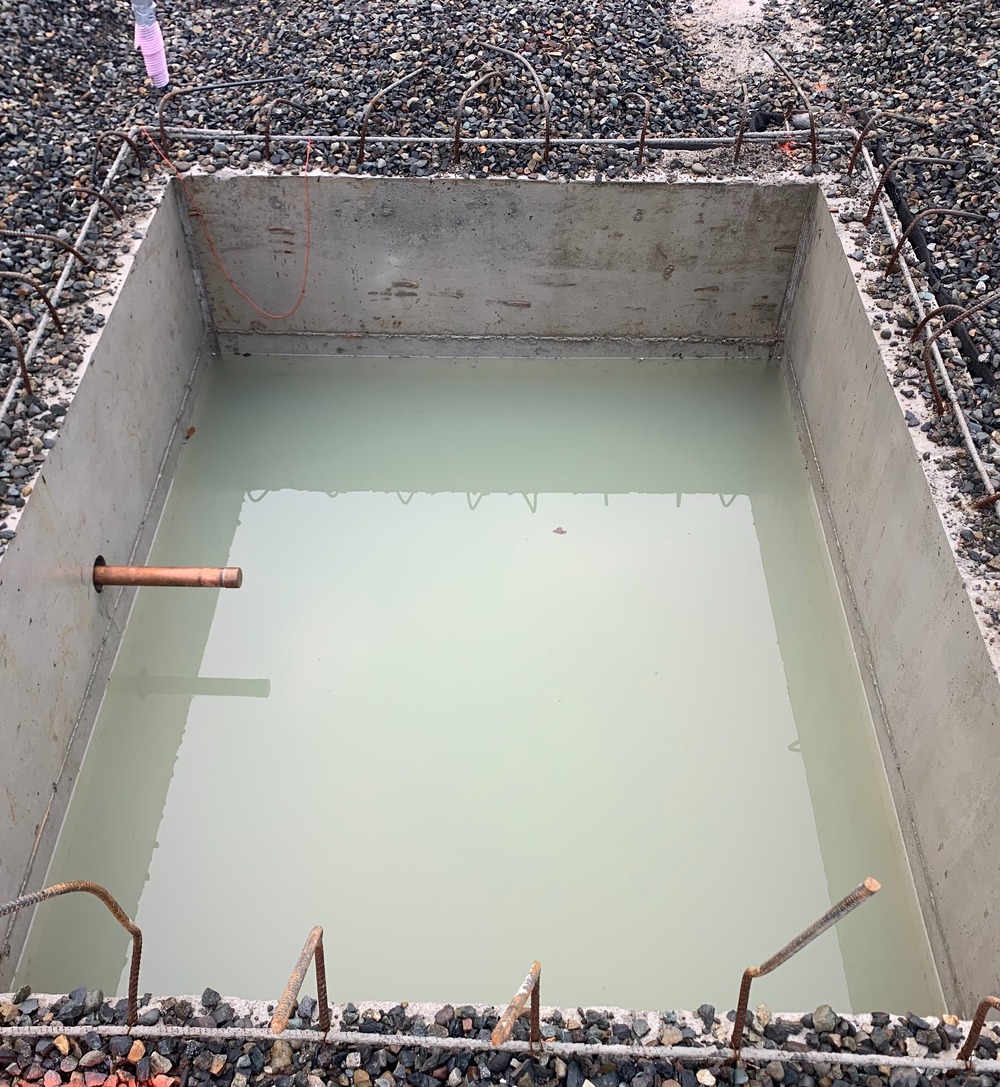
Waterproofing failures are visible and disruptive: wet floors, odor, stained finishes, and recurring callbacks. Critical assets like tunnels, garages, and occupied spaces suffer public perception hits when leaks persist.


Each incident drains contingency funds and undermines stakeholder trust. Teams become defensive instead of proactive, and future bids must price in perceived risk.

Where It Performs

E5® Waterproofing is designed for both new construction and rehabilitation where hydrostatic pressure, moisture migration, or long-term durability are critical. By densifying the matrix and reducing permeability at the pore level, it protects finishes, adhesives, and reinforcement without the complexity of external membranes. Teams gain schedule certainty, while owners see fewer callbacks and lower lifecycle cost across below-grade, water-bearing, and high-traffic environments. The result is a built-in waterproofing strategy that scales from buildings to heavy infrastructure.

Retail Icon

Corporate & Retail

Polished floors and tenant spaces that resist moisture and efflorescence for cleaner finishes and fewer callbacks.
Healthcare Icon

Healthcare Facilities

Hygienic, low-permeability slabs that protect adhesives under resilient flooring and support rigorous cleaning.
Education Icon

Education Campuses

Durable, long-life corridors and classrooms with moisture control for resilient and terrazzo systems.
Government Icon

Government & DOT

Bridge decks, tunnels, and pavements with long-term permeability reduction under harsh exposure.
Water Icon

Water & Wastewater Infrastructure

Treatment plants, shafts, and tunnels built to resist hydrostatic pressure and reduce leakage risk.
Parking Icon

Parking & Below-Grade Structures

Garages, podiums, and foundations where built-in waterproofing mitigates seepage and freeze-thaw damage.

Waterproofing--The E5 Way

All concrete is waterproof - until it cracks. With E5, our Internal Cure & Liquid Fly Ash product is a deadly combination to fight against cracking - creating a self healing concrete.

Transforming concrete from within.

Design for hydrostatic conditions without relying on membranes. E5® densifies the matrix and reduces permeability, aligning with PRAH guidance so details stay clean and constructible.

Clear testing and results simplify submittals and QA/QC. You get a documented path to lower permeability, tighter risk control, and long-term durability in below-grade and water-bearing elements.

E5® integrates at the plant with straightforward sequencing, supporting stable slump/flow and uniform dispersion. Fewer jobsite tweaks mean fewer surprises on pour day.

Consistent mixes reduce callbacks and protect producer reputation. With engineered pozzolans like Liquid Fly Ash, you can also support cement reduction targets without sacrificing performance.

Densified, moisture-managed concrete is easier to place and finish, keeping troweling smooth and predictable. It reduces efflorescence and surface defects that trigger punch-list churn.

The end result is a harder, more uniform surface that stands up to wear. Crews spend less time fighting conditions—and more time delivering the finish owners expect.


Build waterproofing into the concrete and remove multiple surface steps. Fewer passes, trades, and weather-sensitive operations mean tighter sequencing and cleaner critical-path planning.

The approach reduces risk of late-stage leaks and change orders. You open earlier, with fewer callbacks and a clearer handoff to the owner.

E5® targets permeability under pressure for bridges, tunnels, and water infrastructure—where service life and safety matter most. Denser matrices resist chloride and moisture ingress that drive deterioration.

Standardized testing and results support procurement and performance documentation. Agencies gain longer-lasting assets and reduced lifecycle maintenance exposure.

Built-in waterproofing cuts labor and complexity now, and reduces leak-related remediation later. You protect adjacent finishes, operations, and tenant experience.

Fewer failures mean fewer disruptions and better NOI. The sustainable mix options also help meet ESG goals without sacrificing schedule or quality.

Get Project-Specific Guidance

Share your project details and we’ll help dial in dosing, sequencing, and submittals—so you can pour with confidence.