The Concrete Podcast Ep 7: Concrete Crisis & Type 1L Curing Data
Welcome to the Concrete Podcast—where concrete finishers, engineers, GCs, ready mix producers, researchers, innovators, and DOT officials come together to share real conversations about materials, methods, and the challenges we’re solving across the concrete industry.
________________________________________________________________________________
Concrete, Purpose, and Autism Awareness
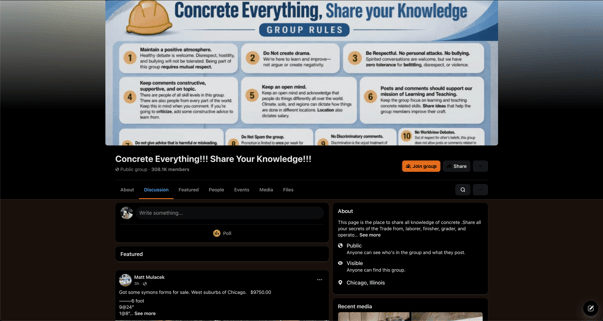
In this episode, Joe Shetterley and Joel Cookston sit down with A.J. Rodriguez, founder of the Facebook community Concrete Everything: Share Your Knowledge, a group built for concrete finishers, contractors, and industry professionals to ask questions, share work, and learn from each other.
Before the conversation gets into concrete, Joe begins with something personal: an autism awareness sticker he once noticed on a rider tied to A.J.’s page. That moment opens the door for Joe to explain one of the deepest reasons E5 exists.
For Joe, E5 was created with purpose. His daughter, Hannah Marie Shetterley, lives with autism and requires full-time care. That experience shaped Joe’s mission to use concrete as a platform to help families dealing with autism, addiction, Alzheimer’s, and other challenges inside and outside the concrete industry.
That mission also connects to E5’s rewards program. When contractors reach certain milestones with E5, Joe has gifted machines and tools wrapped with autism awareness designs. The goal is not just to reward yards poured. It is to remind finishers that their work has purpose and that they are part of something bigger.
A.J. shares his own connection through wrestling and autism awareness tournaments. As a longtime wrestler, coach, and supporter of USA Wrestling, A.J. has stayed connected to events that raise awareness and support for autism causes.
From Wrestling Mats to Concrete Crews
A.J.’s path into concrete started with competition, work ethic, and a little bit of trial by fire.
Before concrete, wrestling and boxing shaped how he approached life. That same mindset followed him into the trades. When he first stepped into concrete, he did not come in as an expert. Like many finishers, he started by learning on the job, asking questions, making mistakes, and figuring out what the tools were as he went.
What separated A.J. was the desire to compete and improve. Within a year, he became a foreman. From there, he moved through residential work, commercial work, large slabs, foundations, high rises, heavy highway, curb and gutter, windmill farms, substations, and traveling work across the country.
That range gave him a wide view of the industry. He learned that every company, every crew, and every region has something different to teach. Weather changes. Materials change. Methods change. But when finishers share what they know, the whole industry gets stronger.
Building Concrete Everything
Starting the Page
Concrete Everything: Share Your Knowledge did not begin as a massive platform. It started because A.J. saw a problem.
He had been part of other concrete groups where the conversations were often negative, disrespectful, or filled with people tearing each other down. Instead of just accepting that, he decided to build something better.
On June 12, 2017, A.J. started the page with a simple idea: create a place where concrete people could talk, share knowledge, ask questions, and build each other up instead of just cutting each other down.
What started as a small group quickly grew. Today, the page has grown to more than 300,000 members and reaches millions of viewers in a matter of weeks.
Managing the Conversation
With a community that large, moderation matters.
A.J. explains that Concrete Everything is run almost like a company, with admins and moderators helping manage posts, comments, and conversations. That structure helps keep the group useful, even when difficult topics, negative comments, AI content, or heated debates show up.
The goal is not to remove disagreement. It is to keep the conversation productive.
Concrete finishers need a place to talk openly about what they are seeing in the field. They need to compare notes, ask questions, challenge bad information, and learn from people outside their own local market.
That is the power of the page. It gives finishers a voice.
Learning Across the Industry
For Joe and Joel, A.J.’s page represents something the industry needs more of: real conversations between the people doing the work.
Concrete Everything is more than entertainment. It has become a place where finishers see new techniques, learn stamp work, compare methods, discuss failures, share wins, and build confidence.
A.J. talks about members who have taken what they saw on the page and used it to grow their skills. Some moved into stamped concrete. Others added new techniques to their work. The competition between finishers became a way to push quality higher.
One finisher posts a strong project, and another wants to raise the bar. That kind of competition can make people better when it is built around respect and learning.
Type 1L Cement and the New Reality in the Field
The conversation also moves into one of the biggest issues facing finishers today: Type 1L cement and the way concrete has changed.
A.J. and Joe both reflect on earlier days when the “goalposts” were wider. Finishers still had to know what they were doing, but traditional Portland cement gave them more room to work. Crews knew what they could get away with. Timing was still important, but the material felt more familiar and more forgiving.
With Type 1L, that timing has changed.
Joe explains that when he started testing Type 1L, he noticed water demand change and abrasion numbers move in the wrong direction. In the field, finishers began feeling the difference before many of them even knew what had changed in the cement.
That is one of the biggest frustrations: finishers are often handed the problem without being given the information needed to understand it.
A.J.’s page has helped bring those frustrations into the open. Instead of isolated contractors thinking they are the only ones seeing issues, finishers across the country can compare experiences and recognize when a problem is bigger than one crew, one job, or one region.
Why Finishers Need Better Information
A major theme in this episode is the need for honest communication.
Joe discusses the difference between the way Type 1L cement is handled in Europe versus the United States, including concerns around limestone content, carbonate language, kiln dust, and fine particles. The chemistry gets technical, but the field impact is simple: finishers are seeing scaling, delamination, bleed timing issues, and surface problems they are expected to explain or fix.
That creates a difficult position for contractors.
They buy the concrete. They place it. They finish it. They are responsible for the outcome. But too often, they are not told enough about what is actually in the mix or how the material has changed.
Joe’s message is clear: finishers need to wake up, ask questions, and understand that they have a voice because they are the ones buying and finishing the concrete.
That does not mean every problem belongs to the ready mix producer. Producers are also dealing with changes from their own material suppliers. But the solution requires more transparency across the entire chain.
If materials change, the people in the field need to know what changed, why it matters, and how to adjust.
Teaching, Mentorship, and Competition
A.J.’s story also comes back to mentorship.
He talks about the people who helped shape him, including a foreman named Booker Dave who taught him valuable lessons in the field. Like many great finishers, A.J. took something from each mentor and built his own approach from what he learned.
That approach carried into how he trained others.
A.J. says he loved teaching workers who wanted to learn. If someone was willing to put in the effort, he wanted to help make them better. Many of the people he trained went on to become foremen, estimators, and superintendents.
That coaching mindset comes from wrestling, concrete, and life experience. Pick the best person on the crew. Work to get better. Then find the next person you can learn from. Not to brag. Not to tear them down. Just to keep improving.
That is the message A.J. leaves for the audience: be the best you can be.
Key Takeaways
For Contractors:
- Keep learning from other crews, companies, and regions
- Ask questions when materials or timing feel different
- Do not assume every problem in the field is your fault
- Use community and conversation to compare what others are seeing
- Build crews through teaching, mentorship, and healthy competition
For Finishers:
- Your voice matters in the concrete industry
- Timing is everything, especially as materials change
- The old rules may not always apply to new cement and mix designs
- Keep improving your skill set instead of staying locked into one method
- Learn from the best people around you, then pass that knowledge on
For Ready Mix Producers:
- Communicate what is changing in the mix
- Understand that finishers need practical field information, not just tickets and numbers
- Work with contractors instead of leaving them to absorb all the risk
- Recognize that material changes affect timing, finishing, curing, and surface performance
For the Concrete Industry:
- Online communities are helping surface real field problems
- Finishers need a seat at the table when material changes affect their work
- Honest communication matters more than blame
- The industry gets stronger when knowledge is shared
- Purpose, mentorship, and community can help move the trade forward
Concrete Everything: Share Your Knowledge, A Facebook group founded by A.J. Rodriguez
Giving Finishers a Voice
A.J. Rodriguez’s story is about more than a Facebook page. It is about what happens when concrete finishers finally have a place to speak, learn, teach, challenge, and grow together.
Concrete Everything: Share Your Knowledge became a platform because the industry needed one. It gave finishers a place to compare notes, sharpen their craft, talk about problems, and see what others are doing across the country.
For Joe, that kind of community matters because it aligns with the larger mission behind E5: giving finishers purpose, respect, and a voice in an industry that often overlooks them.
This episode brings those themes together: autism awareness, wrestling, mentorship, Type 1L cement, material change, online community, and the drive to become better at the craft.
The Concrete Podcast unifies the concrete industry by sharing real conversations about the challenges we’re solving together. Subscribe for more episodes featuring the people who design it, produce it, place it, and build with it every day.