The Concrete Podcast Ep 7: Concrete Crisis & Type 1L Curing Data
Welcome to the Concrete Podcast—where concrete finishers, engineers, GCs, and DOT officials come together to share real conversations about materials, methods, and the challenges we're solving in the transportation space.
________________________________________________________________________________
A Family Legacy Built on Quality
In this episode, we sit down with Bryce Thoutt, Vice President of Thoutt Brothers—a third-generation concrete finishing company serving Colorado since 1961. From laborer to leadership, Bryce brings 20 years of hands-on experience and invaluable insights into the evolving world of concrete placement, curing, and innovation in extreme climates.
Founded by Bryce's grandfather and now led by his father Don Thoutt as president, Thoutt Brothers remains proudly family-owned with multiple family members in leadership roles. The company has cultivated a culture of longevity, with numerous employees dedicating 20-plus years to the organization. "It's an enjoyable place to work and put down some good concrete," Bryce reflects.
Like many third-generation contractors, Bryce's introduction to the industry wasn't optional. "We called it work sometimes," he laughs, recalling early mornings being dragged to job sites as "free labor." But this mandatory apprenticeship proved invaluable. Over his career, Bryce has worked through every role—from laborer shoveling dirt to finishing concrete, running crews, project management, estimating, and ultimately stepping into executive leadership.
The Industry's Biggest Challenges
The Talent Crisis
One of the most pressing issues facing the concrete industry is the shortage of skilled labor. "Good talent is hard to find. When you find good guys, you want to keep them," Bryce confirms. The older generation of concrete finishers is retiring out, and as Bryce notes, "Concrete guys don't retire until they're forced to or their body breaks."
For young workers entering the field, the first few weeks are critical. "Usually if they make it a couple weeks, they're going to stick around," Bryce explains. The physical demands and early morning starts create a natural filter, but for those who push through, the industry offers rewarding careers with companies that invest in training and development.
Navigating Generational Change
Every family business faces the challenge of transferring culture and adapting practices across generations. For Thoutt Brothers, technology has been both a catalyst for progress and a source of healthy debate. "We've had plenty of disagreements on the way we should do things," Bryce admits. "Obviously, technology is a big blockade for many generational companies because there's a way that it was done, and then new technology comes out."
The key to success? Patience and persistence. "Luckily, our family has always been understanding enough to accept the technology eventually," Bryce says. "Once we get into it, everyone accepts it. There's no more pushback and we move on."
The Eternal Problem
Despite technological advances and evolving materials, some fundamental challenges remain constant. "Concrete cracks; that's a big one that hasn't been solved," Bryce observes. "It's going to continue to come up."
Curing in Colorado: Timing is Everything
Colorado's climate presents unique challenges for concrete curing. The combination of extreme dryness and wind creates conditions where traditional curing methods often fall short. "Wet curing in Colorado hasn't been huge," Bryce explains. "Colorado is so dry that if you're wet curing, you're too late because you already lost the cure time that you needed."
Even with spray-on curing compounds, timing is absolutely critical. "When we do spray cures on our concrete, I tell my guys: you broom it or you tine it—whatever the last thing you do is—I want the cure on it immediately," Bryce emphasizes. "There is no waiting around."
This aggressive approach reflects a fundamental understanding: in Colorado's harsh climate, the window for effective moisture retention is measured in minutes, not hours. For DOT officials and engineers specifying concrete for transportation projects in similar climates, this insight is crucial—standard curing specifications developed for moderate climates may be inadequate for extreme environments.
Material Complexity: The Communication Gap
The increasing complexity of concrete mixes presents both opportunities and challenges. Each generation of the Thoutt family has navigated different material landscapes—from minimal chemical admixtures in grandfather's era, to SCMs in father's era, to today's heavy chemical mixes with compressed schedules.
"The materials have changed a lot, which just makes all of our jobs a little more complicated," Bryce observes. But the critical issue isn't the materials themselves—it's the lack of communication about how they'll perform. "If you just give me a certain mix and I have no idea what it is, how am I going to tell our finishers how to finish it and what they need to look for?" Bryce asks. "The details have become important. It's the core now to make sure you're going to put down good quality concrete that looks good and will perform."
Discovering E5 Internal Cure: A Skeptical Contractor's Journey
Like many experienced contractors, Bryce approached new technologies with healthy skepticism. His introduction to E5 Internal Cure came through Brannan Ready Mix, one of Thoutt Brothers' suppliers. After a presentation by Bobby Cavallaro, an E5 engineer, Bryce decided to test the product on a private alley for a subdivision—investing his own money in the trial.
The conditions weren't ideal. "It was a windy day. It's up on a foothill where this pour was at," Bryce explains. "It was windy—a lot of days in Colorado are dry and not ideal concrete-pouring temperatures or weather—but in Colorado, we have a lot of non-ideal days that we have to pour in."
The results spoke for themselves. "The guys liked the finishability. It came out, they finished it, and we didn't have to use any kind of finishing aid on top. They just bull-floated it and broomed it, and we cut the joints. It was a good day. No cracks, nothing."
For a Colorado contractor, the ability to eliminate finishing aids and evaporation retarders—products that have become standard practice in the state's harsh climate—was remarkable and represented a breakthrough in practical performance.
Key Takeaways
For Contractors:
- Invest in people—longevity creates competitive advantage
- Embrace technology gradually but don't resist progress
- In extreme climates, curing windows are measured in minutes
- Understanding material behavior is as important as placement technique
For Engineers & DOT Officials:
- Climate-specific specifications are essential for performance
- Early-age curing is critical—traditional wet curing may be too late
- Material complexity requires contractor education on behavior
- Innovation like internal curing deserves consideration in extreme environments
For Ready-Mix Producers:
- Partner with contractors through education and support
- Provide performance data, not just claims
- Enable low-risk trial opportunities to build confidence
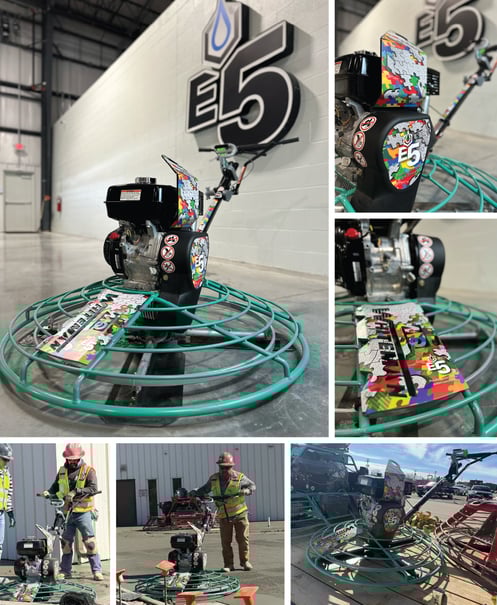
Thoutt Brothers receive free equipment after earning rewards.
Building on Legacy
Bryce Thoutt represents the best of third-generation contractors: deep practical knowledge combined with openness to innovation. His willingness to invest in testing new technologies, commitment to immediate curing application, and focus on understanding material behavior demonstrate the professionalism driving industry progress.
While some challenges remain constant, our approaches continue to evolve. Success requires balancing proven practices with innovation—always keeping the goal in focus: durable, high-performing concrete that serves owners for decades.
The Concrete Podcast unifies the concrete industry by sharing real conversations about the challenges we're solving together. Subscribe for more episodes featuring the people who design it, produce it, place it, and build with it every day.